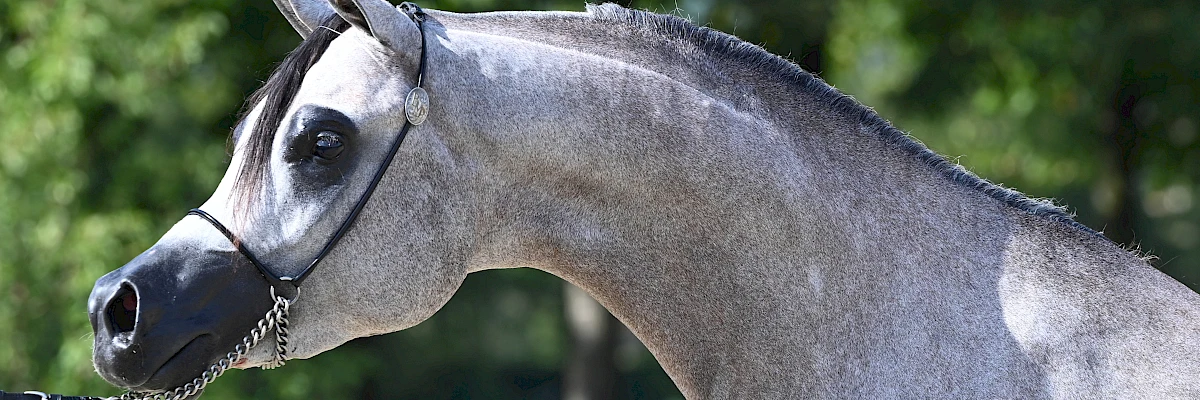
Line breeding is a genetic selection practice that involves mating animals that are related to each other, but not as closely as inbreeding. The main goal of this technique is to fix and consolidate over time the desirable qualities of a specific ancestor or bloodline considered particularly valuable, while maintaining enough genetic variability to avoid the more serious problems associated with close inbreeding. In the case of Arabian horses, line breeding is widely used by breeders who aim to preserve and enhance the distinctive traits of the breed elegance, characteristic profile, physical endurance, and balanced temperament,by tracing them back to historically and morphologically important progenitors. The application of line breeding in Arabian horses is based on a deep knowledge of pedigrees and the genetic characteristics of different lines. Breeders deliberately repeat the name of the same ancestor several times within the first five or six generations in order to “concentrate” that horse’s genes in the offspring’s genetic heritage. This strategy is often used, for example, to maintain the classic type associated with lines such as Nazeer or Bask, which have greatly influenced the morphology and quality of modern Arabians. In this sense, line breeding is not merely mating relatives, but a carefully planned approach designed to balance type preservation with the maintenance of vitality.
Among the main advantages of line breeding is the possibility of achieving greater uniformity among the horses produced. Animals resulting from a well-managed line breeding program tend to exhibit phenotypic and behavioral consistency that faithfully reflects the model of the chosen ancestor. This allows breeders to consolidate a recognizable “signature” or genetic identity, effectively creating a hallmark that distinguishes the production of a particular stud farm. Furthermore, this method allows desirable functional and morphological traits to be fixed more precisely, making the outcome of future generations more predictable.
However, line breeding also carries risks and limitations that require skill and caution. Excessive genetic concentration can reduce variability and lead to the expression of hidden recessive defects. Fertility problems, physical weakness, decreased disease resistance, or structural anomalies may emerge if the breeder fails to maintain a balance between consolidation and renewal of genetic input. In Arabian horses, poor management of line breeding can result in animals that are AESTHETICALLY TYPICAL but LESS FUNCTIONAL , or with overly sensitive temperaments, compromising the versatility for which the breed is renowned.
Proper line breeding is therefore characterized by careful planning and by the breeder’s ability to combine genetic knowledge, experience, and selective sensitivity. It is essential to monitor inbreeding coefficients and to periodically introduce NEW BUT COMPATIBLE GENETIC influences to prevent stagnation and PRESERVE THE OVERALL HEALTH OF THE LINE . Moreover, a sound line breeding program should not focus solely on aesthetic resemblance, but also take into account functionality, disposition, and the capacity to transmit positive traits consistently and sustainably over time. That's why Breeder Selections is born, the goal is to improve the genetic potential on purebred arabian horses,making easy to look for compatible horses and estimating in few seconds if the selective process is going in a good or bad way. Like this everyone can invest in the WELFARE OF THE BREED.
"Pedigree doesent' run, breathe or give birth, the horse YES"